

Odd shapes create two problems at once. They snag on doorways, and they shift in boxes. That is why how to pack oddly shaped items starts with control. You control the shape when you disassemble. You control movement when you wrap well. You control confusion when you label clearly. Then you control damage when you load with balance in mind. So, use the tips and tricks on how to pack up oddly shaped objects, our movers MA suggest.
Start With A Simple Packing Goal
Generally, when packing oddly shaped items, you need to use some common rules. First, protect the surface. Next, stop the movement inside the package. Then, keep weight low and centered. After that, label every side so anyone can handle it safely. This approach works for almost anything, from art pieces to heavy equipment.

When thinking about how to pack oddly shaped items, you should think about each inch of the item.
Pack In Stages, Not In A Rush
How to pack oddly shaped items is not only about the technique. It’s about planning. So, work in stages, so you stay consistent. Stage one covers measuring and photos. Stage two covers disassembly and parts. Stage three covers wrapping and padding. Then, stage four covers boxing or crating. Stage five covers labels and loading order.
Build Your Materials Kit First
You pack faster when everything sits within reach. Also, you avoid “close enough” packing choices.
- Bubble wrap in two sizes
- Foam sheets or foam rolls
- Packing paper and kraft paper
- Stretch wrap for bundles
- Painter’s tape for safe surface contact
- Heavy-duty packing tape
- Corner protectors and edge guards
- Moving blankets
- Zip bags for screws and bolts
- Cardboard panels for custom shields
- Markers, “fragile” stickers, and labels
You can obtain these at different stores, but if you want to save time, money, and nerves, we suggest using professional packing services since professional packers have the right materials for each item individually.
Measure, Photograph, And Map The Weak Points
Measure height, width, and depth first. Then measure doorways and turns if moving grand, oddly shaped items. Take quick photos from all angles, too. Next, mark weak points with painter’s tape, like thin legs, sharp corners, or glued joints. This step guides your wrap plan.
How To Pack Oddly Shaped Items With Smart Disassembly
When you think about how to pack oddly shaped items, don’t forget about disassembly. Namely, disassembly reduces risk fast. Remove legs, knobs, shelves, hooks, and detachable trim. Then bag every fastener right away. Tape the bag to a large part, not to a finished surface. Finally, write a simple reassembly note on the bag.
- Take a photo before the first screw
- Use one bag per “side” or “section”
- Label bags with a thick marker
- Keep tools in one pouch
- Put small parts in a lidded bin
Wrap For The Shape, Not For The Label
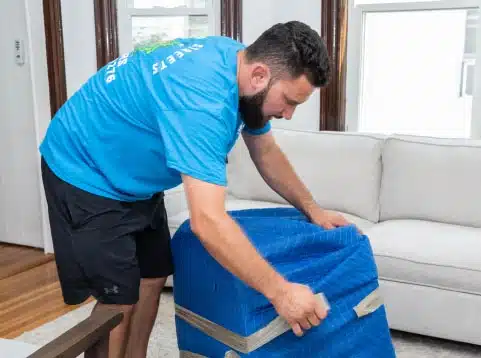
Many people wrap too loosely. So the item still moves and rubs. Instead, build layers that match the shape. Start with a soft base layer, like paper or foam. Then add bubble wrap for shock control. Next, add a firm outer layer, like cardboard panels. After that, use stretch wrap to hold the build in place. Use tape on cardboard, not on the item.
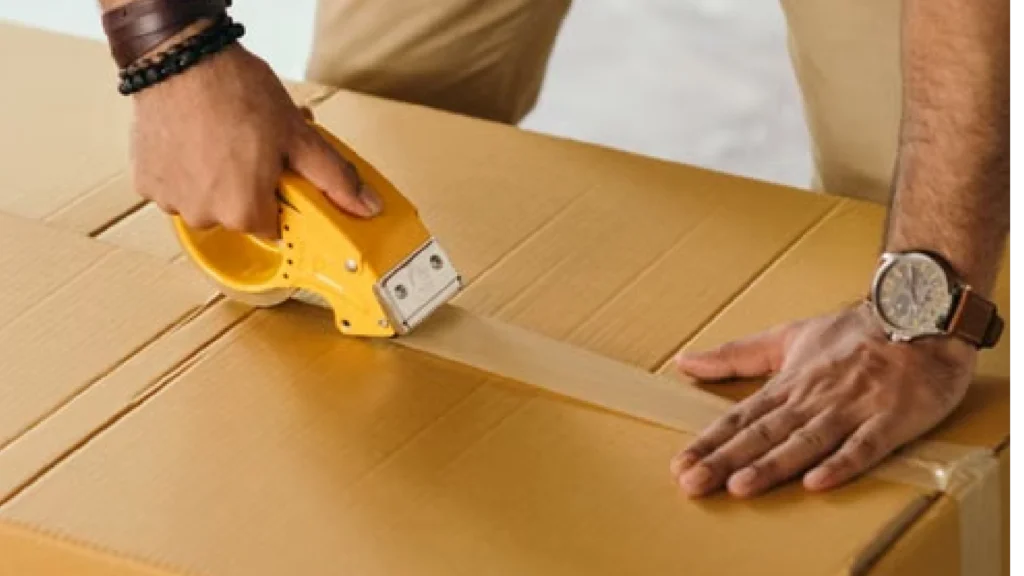
Never put a tape on the item; use it on cardboard.
Protect Edges And Corners Like They Matter Most
Corners fail first in a move. So add corner guards early. If you lack guards, fold thick cardboard into “L” shapes. Then tape those to the wrap layer. Keep edges rigid so other boxes cannot crush them. Pay special attention to mirrors and sharp edges.
Choose The Right Container, Even If You Build It
Odd shapes often fit poorly in standard boxes. So think creatively when packing, think in three options: a box, a split-box “sandwich,” or a small crate. A sandwich uses two flat boxes, one on each side. You pad the middle and strap it tight. This method works well for mirrors, hooks, and art pieces.
Label Like You A Stranger Handles It
Clear labels reduce drops. They also stop upside-down stacking. Write labels on at least two sides, then add one on the top. Use arrows for “this side up.” Use “do not stack” when needed. Add the room name too, so you avoid extra carrying.
- Room name in large letters
- Item name and short description
- “Fragile” when it truly applies
- “Team lift” for heavy pieces
- “Keep upright” arrows on two sides
Stop Movement Inside The Package
A wrapped item can still shift. So you need “fill” and “block.” Fill means paper or foam in empty space. A block means a firm support that prevents sliding. Use rolled cardboard tubes, folded foam, or cut panels. Then shake-test the package gently. If you feel movement, add more blocking.
Avoid Four Common Mistakes
Small mistakes cause most damage. Fix them early, and you save money later. Here’s how to pack oddly shaped items and avoid the msot common mistakes:
- Do not tape directly to finished surfaces
- Do not leave a hollow space in the box
- Do not mix heavy parts with fragile parts
- Do not rely on “fragile” as protection
How to Pack Different Types of Oddly Shaped Items
Now, let’s tackle each item individually so you know how to pack oddly shaped items, both grand and small, such as pianos, pool tables, figurines and sculptures, glassware items, plants, abstract vases and pots, abstract mirrors, animal-shaped hooks, unusual bookends, and others.
Packing A Piano
Pack a piano with surface protection first, then movement control. Close and lock the lid if possible, then pad the top and sides with moving blankets. Next, wrap the full body with stretch wrap to hold blankets tight. Remove the music stand, pedals, or legs only if your model allows safe removal. Bag and label hardware right away. Finally, protect corners with rigid cardboard shields and keep the piano upright during the move. However, you don’t have to do it alone. Our piano movers Massachusetts, pianists often choose, are at your disposal, ready to handle any type of piano.

Don’t worry about how to pack and move your piano; our MA piano movers are here to tackle it from start to finish.
Packing A Pool Table
Break a pool table down in a clean sequence, then protect every layer. Remove pockets, rails, and legs first, then label each rail position. Next, protect slate pieces with foam sheets, then cardboard, then blankets. Wrap each slate as its own “flat package” and keep it vertical during carrying. Also, bundle bolts and plates per section, so reassembly stays simple. Finish with a labeled hardware box and a clear rail set. However, if you don’t want to deal with this packing alone, hire pool table movers to handle it without you having to lift a finger.
Packing Figurines And Sculptures
Treat figurines and sculptures like “point-load” risks, since thin parts snap fast. Wrap delicate extensions with foam first, then add small bubble wrap. Next, wrap the full piece with larger bubble wrap. Place it in a snug inner box with foam blocking. Then place that box into a larger box with padding on all sides. Mark the top, and keep it upright.
Packing Abstract Mirrors
Mirrors need edge protection and a rigid face shield. First, tape a large “X” with painter’s tape on the glass to reduce shatter spread. Next, cover the face with foam sheets or cardboard. Then add corner guards and wrap the full mirror with blankets and stretch wrap. Place it in a mirror carton or a cardboard sandwich pack. Carry it upright, and store it upright too.
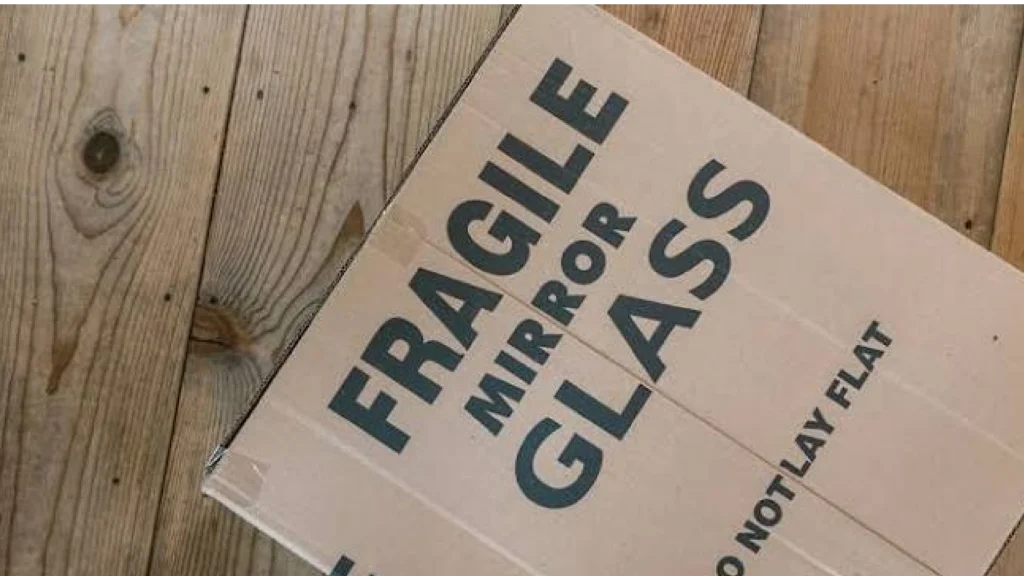
Mirror boxes should be labelled clearly.
Packing Animal-Shaped Hooks
Animal-shaped hooks snag and bend, so you must neutralize the shape. Remove the hooks from the base if you can. If not, cover each hook with thick foam, then wrap the full piece with bubble wrap. Next, add a cardboard collar around protruding parts. Box it with blocking so hooks cannot punch the sides. This is especially important since if the hooks punch the sides, moving injuries may happen. Lastly, label it “do not crush” and keep it near the top of the load.
Packing Unusual Bookends
Unusual bookends can mix weight and fragility in one item. So pack each one separately, even in the same box. Wrap corners with foam first, then wrap the full shape with bubble wrap. Add a cardboard shell around sharp angles, so they cannot cut the box. Place them upright with firm blocking between them. Then pad all empty space so they cannot clack together.
How to Pack Oddly Shaped Items Such as Chandeliers
Turn off the breaker first, then let the bulbs cool. Take photos from every angle, since they help during reassembly. Remove bulbs, crystals, and glass shades one at a time, then place screws in labeled zip bags. Next, wrap each crystal in packing paper, then add small bubble wrap, and pack them in a divided box so they never touch.
Cover the chandelier frame with foam sheets first, then wrap it with bubble wrap, and add extra padding around arms and sockets. Coil wiring loosely and cap the ends, so it stays protected. Place the wrapped frame in a strong dish-pack box or a small crate, then block every empty space with foam or folded cardboard so nothing shifts. Lastly, label the box on multiple sides with “fragile” and “this side up.” Keep it upright in the truck, and strap it in place to prevent sliding.
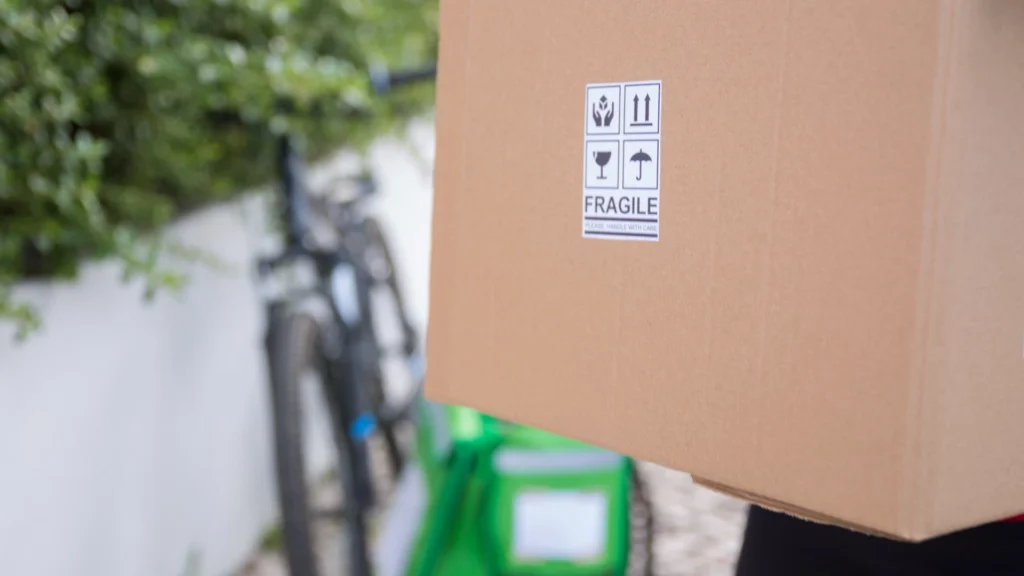
Every box should be labelled ‘fragile’ and ‘handle with care’, especially the boxes with chandeliers.
How to Pack Plants and Planting Equipment
Okay, plants are not literally objects, but still, you need to pack them up as well as the pots and planting equipment. Here’s how to pack everything neatly:
- Pack plants last and unpack first
- Wrap pot bases with plastic, keep foliage uncovered
- Use snug boxes and pad around pots
- Label “live plants” and “this side up.”
- Keep plants upright, avoid heat and cold
- Drain and coil hoses, then bundle poles and stakes
- Clean tools, lock blades, and cover sharp edges
- Seal soil and fertilizers, then keep them separate
However, before moving the plants, do the following:
Water lightly the day before, then let the soil drain so it is not soggy. Next, prune damaged growth so the plant travels with less stress on weak stems. After that, check for pests and treat early, since pests can spread during transport. Finally, stake tall stems with soft ties, so the plant stays upright and stable in the box.
How To Pack Oddly Shaped Items For Long Hauls
Long trips add vibration, heat, and repeated handling. So load oddly shaped items last, then secure them first. Place heavy odd items low and against a solid wall. Use straps to stop the slide and tip. Keep fragile, tall, or narrow items upright and wedged with soft bracing. Also, avoid direct sunlight on glass and plants. However, in order to avoid unpleasant surprises when moving oddly shaped items, hire professional long distance movers in Massachusetts to handle the packing, loading, and transportation.
How to Pack Oddly Shaped Items for Storage
For storage, how to pack oddly shaped items starts with two goals: stop shifting and prevent crushing. First, disassemble what you can, then bag and label every small part. Next, wrap the item in foam to protect the surface, then add bubble wrap for impact, and finish with a tight outer layer using stretch wrap.
After that, use a strong box or a custom cardboard “sandwich,” then block all empty space so nothing moves when you lift it. Label the package on multiple sides, mark the correct upright position, and note any weak points. Finally, store heavy odd items low, keep fragile pieces upright, and leave space so nothing presses on the edges.
However, if you use one of our storage units in Chelsea MA, our professionals will help you understand how to pack oddly shaped items correctly,
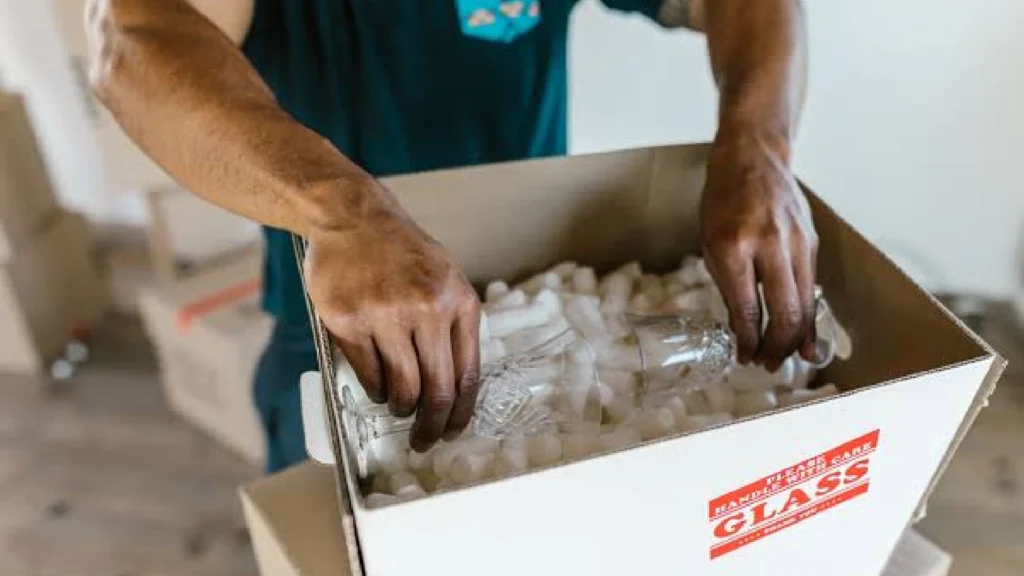
Hire professional packers to help you understand how to pack oddly shaped items and handle fragile items, especially if moving long distances.
Final Check Before You Tape The Last Box
Walk through your packed area and scan for three things: exposed corners, loose parts, and unclear labels. Fix those fast, since they cause most breakage. Then keep a small “odd items kit” handy, with foam, tape, and a marker. With that setup, how to pack oddly shaped items becomes a repeatable process you can trust, even when the items look impossible to box.